How Much Topsoil Do I Need?
How much topsoil do I need? For most small jobs, the answer is less than one cubic yard: a 4 by 8 foot raised bed filled 12 inches deep needs about 1.19 cubic yards, while a 10 by 10 foot lawn area covered 3 inches deep needs about 0.93 cubic yards. The exact amount always depends on the size of the area and the depth of topsoil you plan to spread, so a quick measurement beats a guess every time.
This guide shows you how to work out that volume in minutes, with a simple formula and worked examples, and the depth to use for a lawn, a raised bed, and a grading job. You will also see how topsoil is sold in bulk and in bags, how much it weighs, and where to buy it. To check a hand result, run your numbers through the Topsoil Calculator on Daily Life Calculators and compare it with the examples below.
Table of Contents
How Do You Calculate How Much Topsoil You Need?
Start with the three numbers that decide every topsoil calculation: length, width, and depth. Measure the length in feet, measure the width in feet, and measure the depth in inches. Then use this formula: length in feet times width in feet times depth in inches, then divide by 324. That gives the answer in cubic yards. In short, cubic yards equal length times width times depth divided by 324.
One cubic yard holds 27 cubic feet, and there are 12 inches in a foot, so 27 times 12 is 324. The formula is the same for a garden bed, a flower bed, or a whole lawn, because you are finding a volume: the area in square feet times the depth. If you already know the area in square feet, use the shorter form: square feet times depth in inches, divided by 324. A soil calculator does the same calculation, but it is worth doing it once by hand.
Take care with units before you multiply. A tape measure is the right tool: convert feet to inches or convert inches to feet so length and width stay in feet and depth stays in inches. A depth of 6 inches is half a foot, but in this formula you enter it as 6. In metric terms, one cubic yard is about 0.765 cubic meters, and one cubic meter is about 1.31 cubic yards, so the same imperial result can be turned into a cubic meter figure. That conversion helps if a local supplier quotes in metric units.
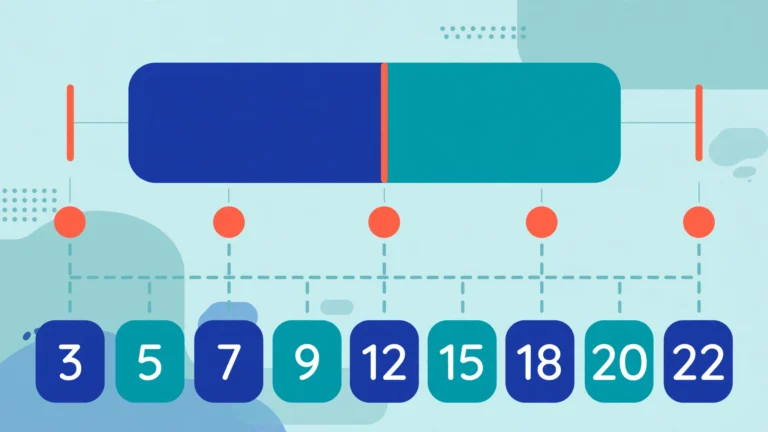
Ground is rarely flat, so take several readings and work out the average depth. Note the low spots and the high spots, and measure the depth in a few places. On uneven ground, a slope, or a patch with old roots, the average depth is the honest number. If the readings differ a lot, find the mean, median and mode of the readings with our mean, median and mode tool. The same length-times-width area step is used by the Tile Calculator for a rectangular floor.
- Measure the length and the width in feet.
- Decide the depth in inches, and measure the depth in several places.
- Multiply length times width times depth, then divide by 324 to get cubic yards.
- Round up a little, and add a small waste allowance for settling and uneven ground.
How Much Topsoil for a Raised Bed?
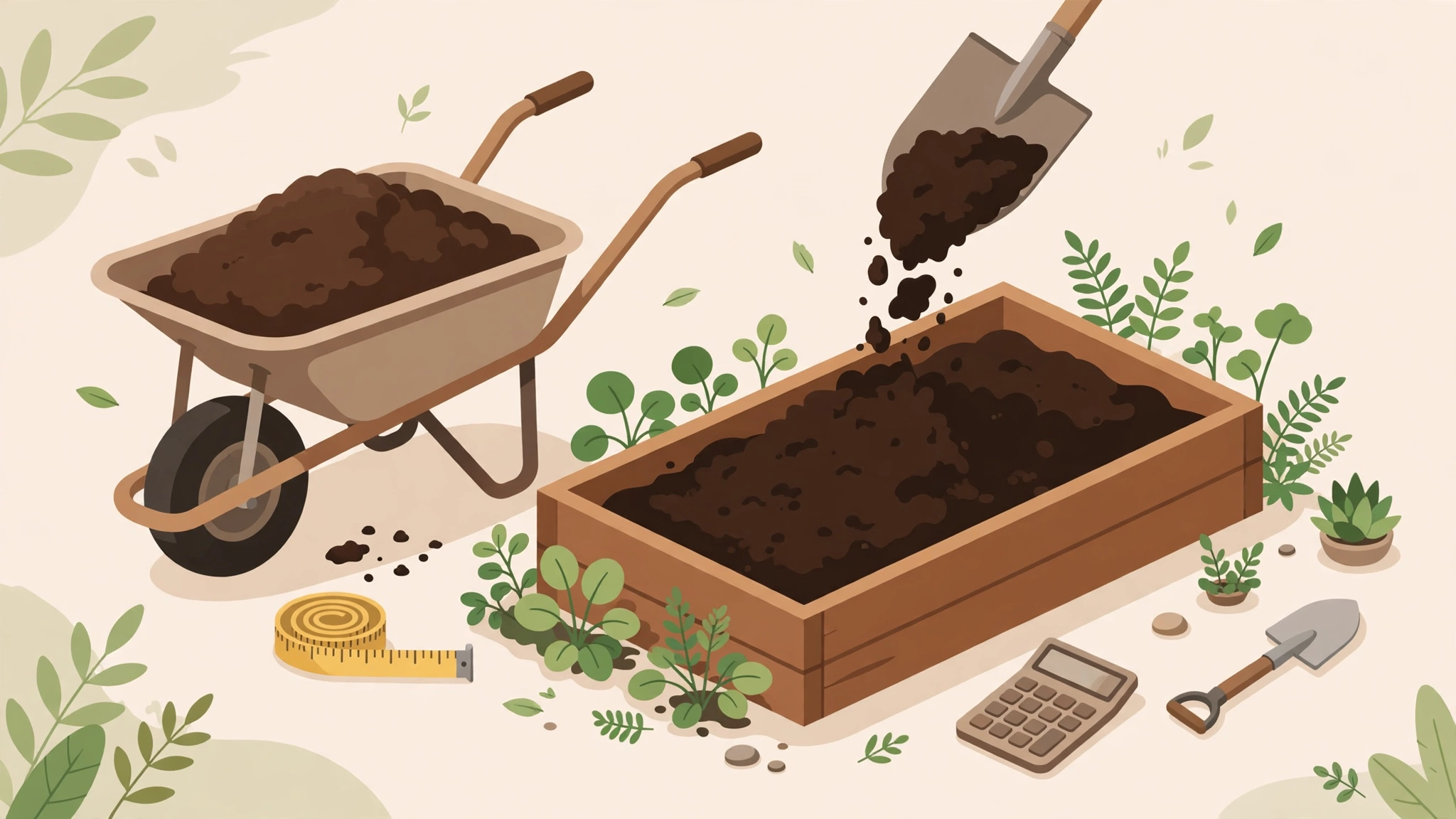
A raised bed is the easiest job to work out, because its sides give you the length, width, and soil depth. Take the first worked example in full: a bed 4 feet long and 8 feet wide, filled 12 inches deep. Multiply first: 4 times 8 times 12 is 384. Then divide by 324, and the answer is 1.19 cubic yards. In cubic feet, that is 32 cubic feet, because 4 feet times 8 feet times 1 foot is 32.
Most raised beds are filled 8 to 12 inches deep, a depth chosen for the plant roots that will live in them. Shallow herbs can manage in 6 inches, but tomatoes and other deep-rooted vegetables need the full 12 inches. A vegetable garden in raised beds does better when the soil holds moisture without staying wet, and that balance depends on drainage as much as on depth. Good topsoil drains freely after watering, yet holds enough water for roots to reach.
A screened topsoil has stones and clods removed, so it spreads evenly and is easy to level with a rake. For richer soil for planting, mix in compost, because compost adds organic matter and nutrients that plain topsoil may lack. Garden soil for beds is often a blend of loam and compost, while a sandy loam suits beds that need fast drainage. Potting soil is a light mix made for planters and containers, not for a large raised bed. Fill dirt is a cheap, poor material used to raise ground level, and it should not be the top layer where plants will grow.
| Raised bed size | Soil depth | Topsoil needed |
|---|---|---|
| 4 by 4 feet | 6 inches | 0.30 cubic yards |
| 4 by 8 feet | 6 inches | 0.59 cubic yards |
| 4 by 8 feet | 12 inches | 1.19 cubic yards |
| 3 by 6 feet | 8 inches | 0.44 cubic yards |
| 8 by 4 feet | 12 inches | 1.19 cubic yards |
How Much Topsoil for a Lawn?
A lawn asks for a different depth, because the topsoil is usually a thin layer over ground that is already there. Here is the second worked example: a lawn area 10 feet long and 10 feet wide, covered 3 inches deep. Multiply 10 times 10 times 3, which is 300, divide by 324, and the answer is 0.93 cubic yards. In cubic feet, that is 25 cubic feet, because the area is 100 square feet and the depth is a quarter of a foot. One cubic yard would cover the same area a little more than 3 inches deep.
Lawn topdressing is a lighter job still. Topdressing means spreading a thin layer of topsoil or compost over an existing lawn to feed it, level small bumps, and help grass seed take hold. A quarter of an inch is a common topdressing depth, and a half inch is already a heavy dressing that can smother grass. For 1,000 square feet at a quarter of an inch, the calculation is 1,000 times 0.25 divided by 324, which is 0.77 cubic yards. At half an inch, the same lawn needs twice as much, about 1.54 cubic yards.
A new lawn needs far more soil than a topdressing. For grass seed or sod on bare ground, most guides recommend 4 to 6 inches of good topsoil so plant roots can spread and the lawn can survive a dry spell. Here is a third worked example: a new lawn 20 feet long and 15 feet wide, with 6 inches of topsoil. Multiply 20 times 15 times 6, which is 1,800, divide by 324, and the answer is 5.56 cubic yards. Before you spread topsoil on a lawn, a soil test will tell you whether the ground is a heavy clay soil that holds water, and whether it needs compost to improve soil quality. After spreading, watering helps the new soil settle, and the lawn should be kept damp until the seed or sod has rooted.
How Deep Should Topsoil Be for Different Jobs?
Depth is a choice, not a guess. Lawn topdressing needs 0.25 to 0.5 inches, leveling low spots needs 1 to 3 inches, and grading to change the fall of water away from a house usually needs 2 to 4 inches, built up in layers. A new lawn needs 4 to 6 inches, flower beds need 6 to 8 inches, and a vegetable garden or a raised bed needs 8 to 12 inches. Those depths give roots room to grow, hold moisture, and keep weeds down, because a thick, healthy layer leaves less bare ground for weeds to take hold in.
One square yard holds 9 square feet, so a 9 square foot patch 6 inches deep needs 0.17 cubic yards, while the same patch 12 inches deep needs twice as much. Compaction also changes the depth you end up with, because loose topsoil that is walked on, watered, and left to settle will lose some of its height. The Old Farmer’s Almanac gives the same pattern, with 6 inches for a new bed, 6 to 12 inches for raised beds, and 1 to 3 inches for leveling.
| Job | Recommended depth |
|---|---|
| Lawn topdressing | 0.25 to 0.5 inches |
| Leveling and grading | 1 to 4 inches |
| New lawn | 4 to 6 inches |
| Flower bed | 6 to 8 inches |
| Vegetable garden or raised bed | 8 to 12 inches |
How Many Bags of Topsoil Equal One Cubic Yard?
One cubic yard holds 27 cubic feet, and that one number turns a bulk amount into a bag count. A bag size is printed on the bag, usually 0.75, 1, 1.5, or 2 cubic feet, and you divide 27 by that number to get the number of bags of topsoil in a cubic yard. A 0.75 cubic foot bag needs 36 bags to make a yard, a 1 cubic foot bag needs 27 bags, a 1.5 cubic foot bag needs 18 bags, and a 2 cubic foot bag needs 14 bags, rounding up from 13.5. Bagged topsoil suits a small job, a single planter, or a topdressing, because you can carry it in a car and use it a bag at a time.
For the raised bed in the first worked example, which needs 1.19 cubic yards, the bag count is about 32 bags of 1 cubic foot each, or 43 bags of 0.75 cubic feet each. For the 10 by 10 foot lawn example, which needs 0.93 cubic yards, you would need about 25 bags of 1 cubic foot each. Half a cubic yard is 13.5 cubic feet, or 18 bags of 0.75 cubic feet each. Dry topsoil is lighter to carry, while wet topsoil is heavier and clumps together, so buy bags on a dry day if you can, and store spare topsoil bags under cover.
| Bag size | Bags per cubic yard |
|---|---|
| 0.75 cubic feet | 36 bags |
| 1 cubic foot | 27 bags |
| 1.5 cubic feet | 18 bags |
| 2 cubic feet | 14 bags |
How Much Does Topsoil Weigh?
The weight of topsoil decides how you move it. Dry topsoil weighs about 2,000 to 2,700 pounds per cubic yard, or about 1.0 to 1.3 tons, while wet topsoil weighs about 3,000 to 3,400 pounds per cubic yard, or about 1.5 to 1.7 tons. That weight matters for a pickup truck, because one cubic yard already weighs more than a ton, so check the payload limit before you load a truckload, and use a wheelbarrow and a shovel to move it in small loads. A dump truck can carry 10 to 14 cubic yards at a time, which suits a large grading job but not a small bed.
Where Can You Buy Topsoil?
A local supplier or a landscape supply yard is usually the best source for bulk soil, because you can see the soil, ask for a screened topsoil, and get a delivery fee quoted with the cubic yard price. A garden center or a home improvement store is better for bags, for a small amount, or for a weekend job when a bulk truck cannot be booked. Ask for the cost per cubic yard, the price per yard, the delivery fee, and the total cost in writing, and check the soil quality before the truck leaves, because a cheap load of dusty, stony soil is not a bargain.
Order extra, but only a little extra. A waste allowance of about 10% covers settling and uneven ground, so order about 10 percent more than the calculation gives you. Ordering far more is an over-order that wastes money, while an under-order leaves a job half finished and adds a second delivery fee. On delivery day, be ready with a clear place to tip the load, and read the delivery slot carefully, because delivery windows are often given in 24-hour time, as explained in our guide on how to tell military time. If a tree must be cleared before you grade, price that job first with our tree removal cost calculator, and if you put a large order on a card, check what it would cost with our credit card interest calculator. For longer-term planning, see how much do I need to retire. Calculator Soup also gives bag and weight figures for topsoil, and its topsoil calculator is a useful second check.
What Mistakes Make People Order the Wrong Amount?
The most common mistake is measuring once and trusting that one number. Re-measure the length and width, check the depth in several places, and measure the depth again after the first load is spread, because a bed that is deeper at one end than the other will use more soil than the average depth suggests. For a triangular bed, work out the area first with a right triangle calculator, and for an odd shape, split it into rectangles and add the volumes. When you spread the topsoil, use a rake to level the surface, and keep cats and dogs off the fresh soil until it has settled, as a cat or dog will dig in loose soil; if you share your garden with pets, see our cat age calculator and small dog age calculator for pet planning.
Frequently Asked Questions About Topsoil
How many cubic yards of topsoil do I need for a 10 by 10 foot area?
At 3 inches deep, a 10 by 10 foot area needs 0.93 cubic yards. At 6 inches deep, it needs 1.85 cubic yards, because twice the depth needs twice the soil.
Can I use fill dirt instead of topsoil?
No, not for the top layer. Fill dirt is cheap material for raising ground level, but it has little organic matter, so use topsoil, or topsoil mixed with compost, where plants will grow.
How much topsoil do I need to cover 1,000 square feet?
At 1 inch deep, 1,000 square feet needs 3.09 cubic yards. At 3 inches deep, it needs 9.26 cubic yards. Use the formula: 1,000 times depth in inches, divided by 324.
How thick should topsoil be for grass seed?
For grass seed, use 4 to 6 inches of topsoil on bare ground, then sow the seed, water gently, and keep the surface damp until the grass is rooted.
Will topsoil settle after delivery?
Yes, topsoil will settle by about 10 to 20 percent in the first weeks, as water and foot traffic press it down. That is why a 10 percent waste allowance is a sensible part of any estimate.
Disclaimer: This article is general information only, and prices, depths, and weights vary by supplier, region, and soil type. Check the measurements for your own area, and ask a local supplier or a qualified gardener if you are unsure.
Garden beds, raised beds, and lawns all use the same length, width, and depth calculation, so once you have measured one area, the next one takes only a minute.